

Post-childbirth recovery necessitates a careful and organized method of movement. Engaging in low-impact postpartum exercises aids in restoring strength, enhancing mobility, and facilitating healing while avoiding undue stress on your body.
Regardless of whether your emphasis is on postpartum recovery workouts, pelvic floor strengthening, or gentle core exercises, this guide offers all the resources required for a safe return to fitness.
As a postpartum fitness specialist, I always recommend starting with low-impact movements to protect healing tissues and gradually rebuild strength.
Moreover, these gentle movements play a significant role in easing your transition into a comprehensive postpartum fitness plan, allowing you to gradually advance to strength training and high-intensity workouts as your body becomes prepared.
5-Move Postpartum Routine
Commence with this routine that is suitable for beginners:
- Pelvic Tilts – Engage the deep core muscles
- Cat-Cow Stretch – Enhance spinal mobility
- Glute Bridges – Fortify the hips and lower back
- Psoas Stretch – Alleviate tension in the hip flexors
- Deep Breathing + Core Engagement – Reestablish abdominal control
Complete 10 to 12 repetitions for each exercise, performing 2 sets on a daily basis.
Why Low-Impact Postpartum Exercises Matter
Low-impact workouts play a crucial role in:
- Facilitating the healing of abdominal separation (diastasis recti)
- Enhancing pelvic floor strength
- Alleviating postpartum pain and stiffness
- Boosting circulation and energy levels
- Aiding in the prevention of injuries during recovery
Advantages vs Disadvantages Table
| Benefits | Risks (if ignored) |
|---|---|
| Faster healing | Pelvic floor damage |
| Improved posture | Chronic back pain |
| Core stability | Worsened diastasis recti |
| Mental wellness | Fatigue and burnout |
1. Psoas Stretch for Hip Recovery
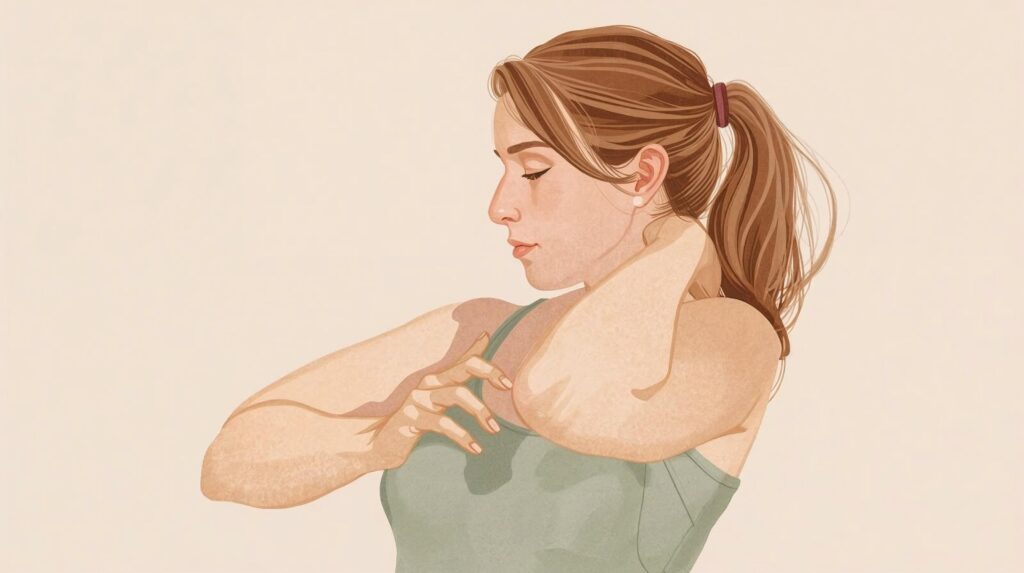
Psoas stretch guide: Tight hip flexors frequently occur following pregnancy.
How to perform:
- Step forward with one foot into a lunge
- Ensure the back leg remains extended
- Gently push your hips forward
Benefits:
- Relieves lower back tension
- Improves posture
- Supports safe post-birth stretches
2. Couch Stretch for Deep Hip Flexor Release

Couch stretch tutorial: A deeper version of the psoas stretch.
Steps:
- Position one leg against a wall or couch.
- Maintain an upright torso.
- Sustain this position for 20–30 seconds.
Ideal for
Women who have experienced prolonged sitting habits after childbirth.
3. Cat-Cow Flow for Spinal Mobility
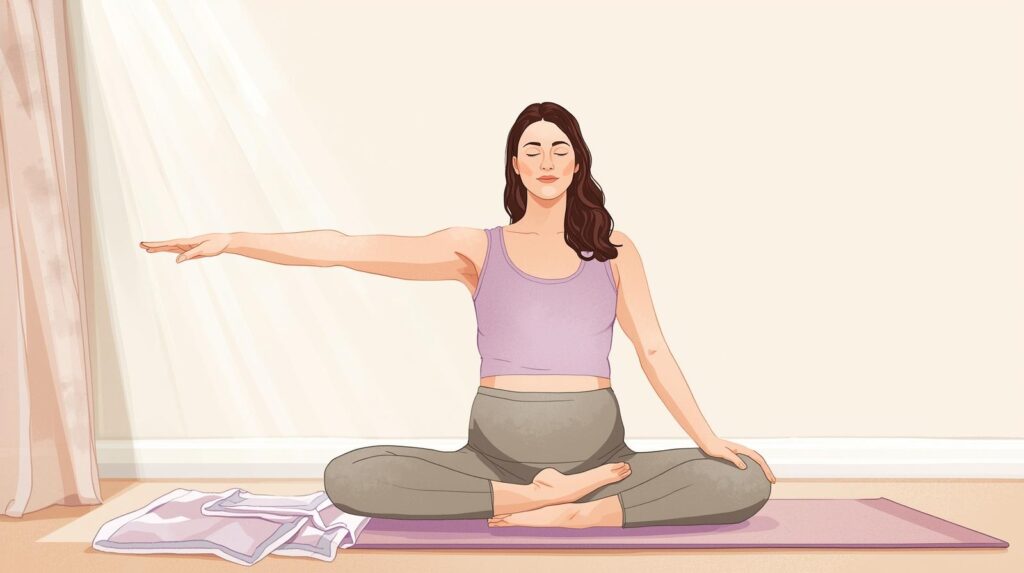
The advantages of the Cat-cow flow: This is considered one of the safest and gentlest exercises for the core.
Instructions:
- Inhale: Curve your back (cow)
- Exhale: Round your spine (cat)
Advantages:
- Enhances flexibility
- Engages the core
- Alleviates stiffness
4. Glute Stretch for Lower Body Strength
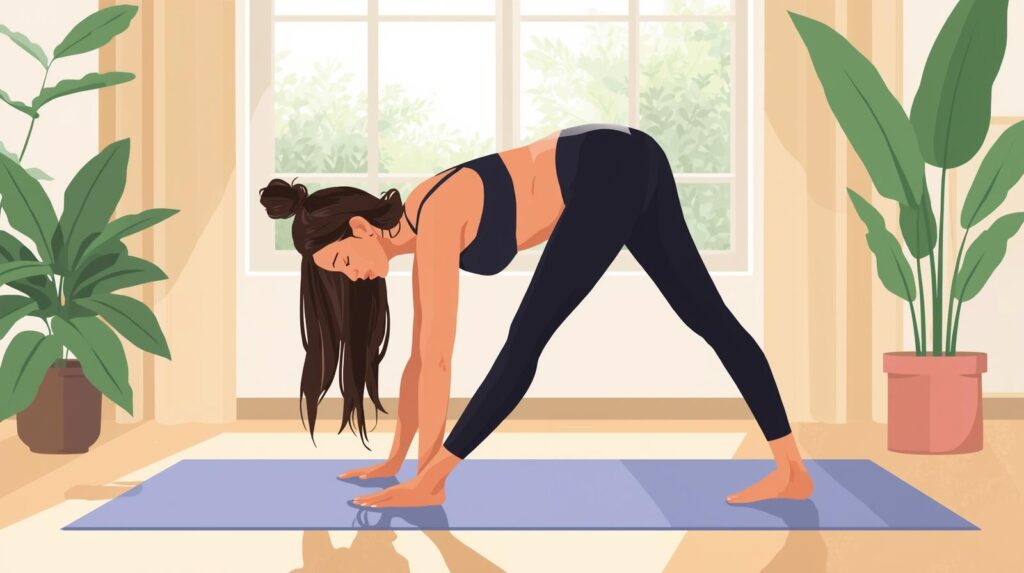
Instructions for Execution:
- Begin by lying on your back.
- Cross one ankle over the knee of the opposite leg.
- Gently pull your legs toward your chest.
Importance of This Routine:
- Aids in maintaining pelvic alignment.
- Helps in preventing hip discomfort.
5. Cobra Stretch for Core Activation
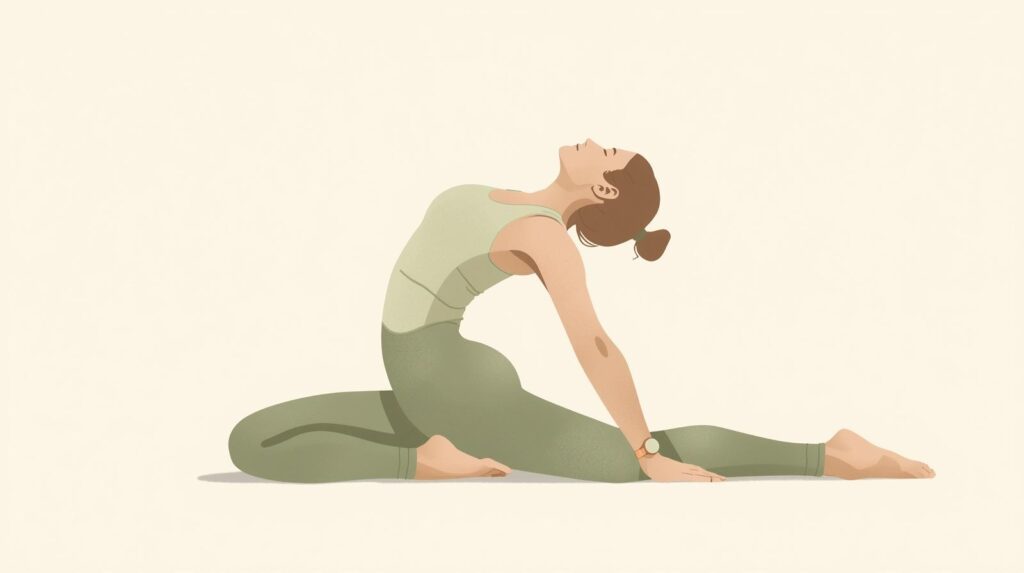
Steps:
- Lie face down
- Press palms into the floor
- Lift your chest gently
Focus:
- Engage your abdominal muscles lightly
- Enhances posture
⚠️ Refrain from this exercise if you experience any strain in your abdomen.
6. Frog Stretch for Pelvic Floor Relaxation
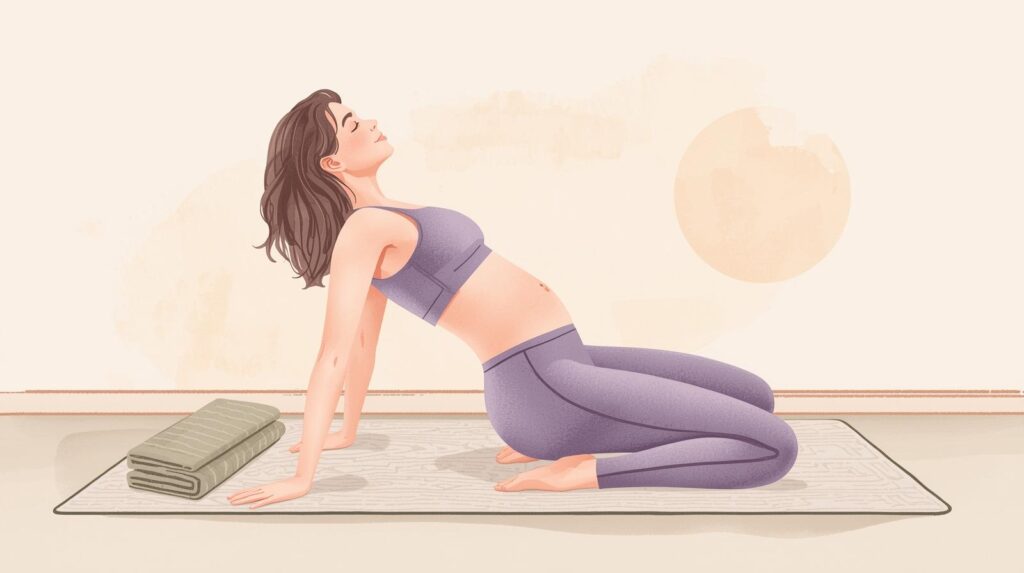
Advantages:
- Alleviates pelvic tightness
- Improves flexibility
- Aids novice maternal fitness
7. Groin Stretch (Vertical Variation)
Groin stretch vertical guide
Instructions:
- Position yourself with your legs spread wide apart.
- Transfer your weight from one side to the other.
Ideal for:
- Enhancing flexibility.
- Alleviating tightness.
8. Gentle Core Exercises for Stability
Significant activities encompass:
- Heel slides
- Modified dead bugs
- Breathing exercises
9. Pelvic Floor Strengthening Exercises
Pelvic floor strengthening guide
Essential exercises include:
- Kegel exercises
- Bridge holds
- Breathing coordination
Note
Refrain from excessive tightening—maintain a balance between strength and relaxation.
10. Full-Body Beginner Postpartum Workout Plan
Beginner maternal fitness routine
| Day | Focus |
|---|---|
| Day 1 | Core + Breathing |
| Day 2 | Lower Body |
| Day 3 | Stretching |
| Day 4 | Rest |
| Day 5 | Full Body |
| Day 6 | Mobility |
| Day 7 | Active Recovery |
Expert Tips for Safe Postpartum Exercise

Returning to exercise after pregnancy should be approached gradually and with caution. Adhering to expert recommendations can assist new mothers in safely rebuilding their strength while safeguarding the core and pelvic floor during the postpartum recovery phase.
1. Begin Slowly and Advance Gradually
Initiate with gentle movements and low-impact exercises prior to progressing to more vigorous workouts. Short sessions lasting 10–15 minutes serve as an excellent starting point, and you may extend the duration as your strength develops.
2. Emphasize Pelvic Floor Strength
The pelvic floor muscles provide support to the bladder, uterus, and core. Engaging in exercises such as Kegels and gentle core activation can aid in restoring strength and stability following childbirth.
3. Heed Your Body’s Signals
Be attentive to how your body responds during and after exercise. Should you encounter pain, dizziness, heavy bleeding, or pelvic pressure, cease exercising and seek advice from a healthcare professional.
4. Uphold Proper Posture
Posture frequently alters during pregnancy and the early stages of motherhood due to feeding and carrying the infant. Maintain a neutral spine, relaxed shoulders, and a gently engaged core during workouts to prevent strain.
5. Ensure Hydration and Rest as Necessary
Proper hydration and sufficient rest are crucial for postpartum recovery. Consuming adequate water and allowing time for recovery between workouts can help avert fatigue and facilitate healing.
6. Opt for Low-Impact Exercises Initially
Activities such as walking, stretching, yoga, and light strength training are particularly suitable during the early postpartum recovery period. These movements enhance circulation and mobility without imposing excessive strain.
7. Obtain Medical Clearance
Most healthcare professionals advise waiting approximately 4–6 weeks postpartum before commencing structured exercise routines. Always adhere to your doctor’s guidance, particularly following a C-section or a complicated delivery.
8. Exercise Patience During Your Recovery
Each postpartum experience varies. Some women recover their strength swiftly, while others may require additional time. Adhering to gentle exercises and maintaining appropriate recovery practices will assist you in safely restoring your fitness gradually.
By implementing these professional recommendations, new mothers can establish a secure and sustainable postpartum exercise regimen that facilitates healing, enhances strength, and encourages long-term well-being.
When Can You Start Low-Impact Postpartum Training?
Most women may commence light activities such as walking and breathing exercises as soon as they feel prepared, unless otherwise directed by a physician.
However…
You Should Always Get Medical Clearance If:
- You underwent a cesarean section.
- You encountered complications.
- You are experiencing pelvic discomfort.
- You have a suspicion of diastasis recti.
- You are feeling a sense of heaviness or bulging in the pelvic region.
Once you receive approval from your physician, you may safely engage in this low-impact postpartum program.
Weekly Low-Impact Postpartum Plan (Table)
| Day | Focus | Exercises |
| Monday | Core + Pelvic Floor | Deep breathing, pelvic lifts, heel slides |
| Tuesday | Mobility | Cat-cow, hip circles, gentle walk |
| Wednesday | Strength | Glute bridges, wall push-ups, mini squats |
| Thursday | Rest or Light Walk | 10–15 minutes |
| Friday | Core Stability | Seated marches, side-lying leg lifts |
| Saturday | Light Cardio | Low-intensity walking |
| Sunday | Rest + Stretching | Gentle full-body stretch |
Progress Chart: When to Increase Intensity
| Weeks Postpartum | Recommended Intensity | Focus |
| 0–2 weeks | Very gentle | Breathing + pelvic floor |
| 2–6 weeks | Light exercises | Low-impact strength + mobility |
| 6–12 weeks | Moderate | Longer workouts, resistance bands |
| 12+ weeks | Higher intensity | Strength training, cardio |
As is customary, each mother is unique—pay attention to your body and advance gradually.
How This Fits Into Your Full Postpartum Fitness Plan?
Low-impact exercises serve as the cornerstone of a secure postpartum fitness program.
Once you gain strength, you may progress to:
Research-Based Recommendations

- ACOG – Exercise After Pregnancy
- Mayo Clinic – Postpartum Exercise
- NHS UK – Keeping Active After Baby
- Cleveland Clinic – Pelvic Floor Recovery
- Pelvic Health Physical Therapy Associations
Conclusion: Low-Impact Exercises for New Moms
Low-impact exercises provide an excellent opportunity for new mothers to safely regain strength, enhance flexibility, and facilitate overall postpartum recovery.
Following pregnancy, the body requires time to heal, and gentle movements can assist in restoring muscle balance without exerting excessive strain on the core or pelvic floor.
Engaging in activities such as stretching, light mobility exercises, and controlled bodyweight movements contributes to improved circulation, posture, and energy levels, thereby making daily tasks like lifting or carrying your baby more manageable. Additionally, these exercises help alleviate muscle stiffness and promote gradual strength development.
During postpartum recovery, consistency holds greater significance than intensity. Even brief daily sessions of low-impact postpartum exercises can significantly enhance mobility and boost confidence.
It is essential to pay attention to your body, progress at a gradual pace, and seek advice from your healthcare provider prior to initiating any exercise regimen. With patience and the appropriate approach, low-impact workouts can enable new mothers to regain strength, feel more energized, and safely return to an active lifestyle.
Frequently Asked Questions
1. Are low-impact postpartum exercises safe after a C-section?
Yes, but start slowly and only after medical clearance. Avoid core exercises that strain your incision.
2. How soon can I start a low-impact postpartum program?
Some women start gentle breathing and walking a few days after birth, but always consult your doctor.
3. Can low-impact exercises help reduce diastasis recti?
Yes—breathing, pelvic floor training, and deep core activation can help close the abdominal gap.
4. How long should a postpartum workout be?
Start with 10–15 minutes and increase gradually.
5. When can I switch to more intense workouts?
Usually after 8–12 weeks, depending on your recovery.