
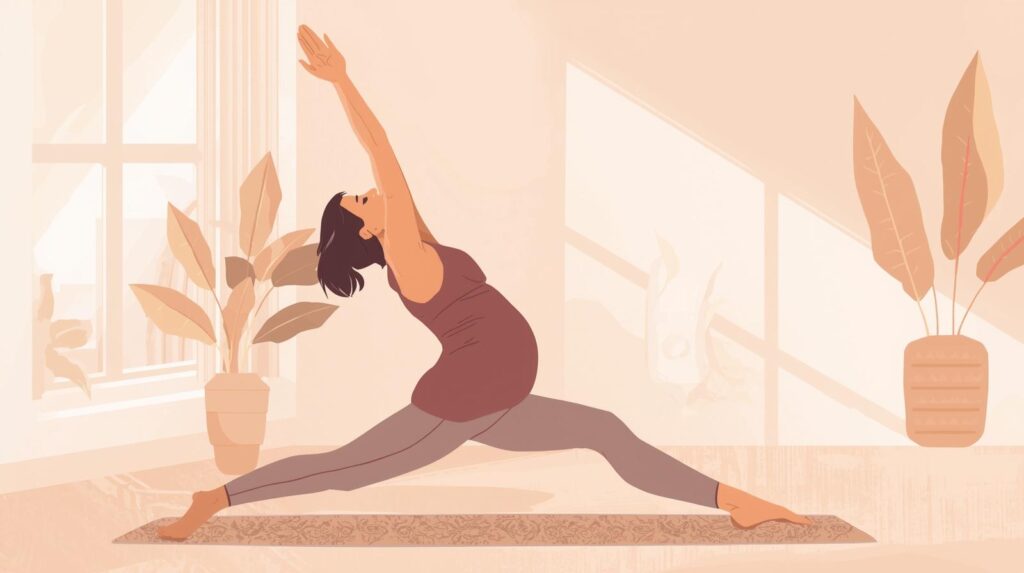
What Is a Vertical Stretch and Why It Matters After Pregnancy
The vertical stretch postpartum is a straightforward yet effective exercise aimed at lengthening the spine, enhancing posture, and alleviating tension in the upper body following pregnancy. Throughout pregnancy, the body undergoes adaptations to accommodate the developing baby, which often results in rounded shoulders, tight back muscles, and a compressed posture. After childbirth, these alterations may persist, particularly during daily tasks such as feeding, holding, and carrying your baby.
A vertical stretch postpartum serves to counteract these effects by gently extending the spine and opening the chest and shoulders. This exercise enhances alignment and diminishes strain on the neck and lower back, which are common discomfort zones for new mothers.
Another significant advantage of the vertical stretch postpartum is its capacity to facilitate improved breathing. As the spine elongates and the chest expands, it becomes easier to take deep, soothing breaths—an essential component of postpartum recovery and stress management.
This stretch is especially beneficial due to its low-impact nature and the fact that it can be performed anywhere, making it suitable for beginners. When integrated with routines such as [Low Impact Postpartum Exercises], it contributes to a well-rounded recovery plan that emphasizes both flexibility and strength.
Furthermore, incorporating a vertical stretch postpartum into your daily regimen prepares your body for more advanced exercises. Structured programs like the [Postpartum Fitness Program] include similar stretches designed to assist new mothers in safely rebuilding strength, enhancing posture, and regaining mobility after pregnancy.
9 Benefits of Vertical Stretch Postpartum
1. Enhances Posture
Following pregnancy, numerous women encounter rounded shoulders and a forward-leaning stance. The vertical stretch postpartum assists in lengthening the spine and promotes correct alignment.
2. Alleviates Neck and Shoulder Tension
Caring for and feeding your baby can lead to tightness in the upper body. This stretch gently alleviates tension in the neck and shoulders.
3. Eases Back Discomfort
Suboptimal posture and weak core muscles may result in back pain. The vertical stretch postpartum aids in reducing strain on both the upper and lower back.
4. Encourages Spinal Flexibility
Stretching upwards enhances spinal mobility, allowing your body to move more freely and comfortably.
5. Improves Breathing
By opening the chest and lengthening the torso, the vertical stretch postpartum facilitates deeper breathing, which promotes relaxation and recovery.
6. Mitigates Muscle Stiffness
Postpartum inactivity or repetitive actions can lead to stiffness. This stretch assists in loosening tight muscles and restoring natural movement.
7. Aids Core Engagement
Although it is a gentle stretch, it promotes light core activation, which is crucial for rebuilding abdominal strength.
8. Enhances Daily Movement
Improved posture and flexibility make daily activities—such as lifting your baby or standing for extended periods—more manageable and comfortable.
9. Prepares the Body for Exercise
The vertical stretch postpartum serves as an excellent warm-up exercise that readies your body for low-impact postpartum workouts and strength training.
How to Do the Vertical Stretch Postpartum (Step-by-Step)
Step 1: Stand in a Neutral Position
- Stand upright with your feet positioned hip-width apart.
- Maintain slightly soft knees (not locked), relaxed shoulders, and a naturally upright spine.
👉 Tip: Visualize a string pulling the top of your head upward to help align your posture.
Step 2: Raise Your Arms Overhead
- Gradually lift both arms directly upwards towards the ceiling.
- Keep your arms close to your ears with your palms facing each other or slightly forward.
👉 Move slowly to prevent straining your shoulders.
Step 3: Lengthen Your Spine
- Reach upwards as far as is comfortable for you.
- Concentrate on elongating your spine rather than arching your lower back.
👉 Keep your ribs down and refrain from leaning backward.
Step 4: Gently Engage Your Core
- Gently tighten your abdominal muscles to provide support for your lower back.
This is particularly crucial during the vertical stretch postpartum to safeguard your healing core.
Step 5: Hold and Breathe
- Maintain the stretch for 15–30 seconds while taking slow, deep breaths.
- Experience the stretch throughout your arms, shoulders, and entire spine.
👉 Keep your shoulders relaxed and avoid shrugging.
Step 6: Lower Your Arms Slowly
- Lower your arms in a controlled manner and return to your initial position.
⏱️ Recommended Routine
- Hold: 15–30 seconds
- Repeat: 2–3 times
- Frequency: Daily or after extended periods of sitting
⚠️ Postpartum Tips
- Commence gently, particularly in the initial weeks
- Avoid arching your lower back
- Cease if you experience pain or discomfort
- Modify by performing the stretch while seated if necessary.
This vertical stretch postpartum complements your low-impact postpartum exercises effectively, enhancing posture, reducing stiffness, and supporting overall recovery.
C-Section Modifications
If you are recovering from a C-section, modify the vertical stretch postpartum to reduce strain on your core.
| Standard Stretch | C-Section Modification |
|---|---|
| Standing upright | Perform seated on a chair |
| Full arm extension | Raise arms halfway |
| Deep stretch hold | Shorter hold (10–15 seconds) |
| Core engagement | Keep core relaxed initially |
| Repeated stretches | Start with fewer repetitions |
Always move slowly and avoid any discomfort near the incision area.
Safety Warnings for Vertical Stretch Postpartum

⚠️ 1. Obtain Medical Clearance First
Prior to commencing any postpartum exercise, including the vertical stretch postpartum, it is advisable to consult your healthcare provider—especially if you underwent a C-section or experienced complications during delivery.
⚠️ 2. Avoid Overarching Your Lower Back
A frequent error is leaning backward while reaching upward. This action can exert pressure on your lower back and core.
👉 Maintain a neutral spine and concentrate on lengthening upward rather than bending.
⚠️ 3. Exercise Caution with Core Weakness
Following pregnancy, your abdominal muscles may still be in the healing process.
Refrain from excessive stretching if you observe:
- Abdominal bulging (potential diastasis recti)
- Weak core control
👉 Keep your core gently engaged throughout the stretch.
⚠️ 4. Cease Activity If You Experience Pain
A stretch should be gentle—not painful.
Immediately stop if you encounter:
- Sharp back or abdominal pain
- Shoulder discomfort
- Dizziness or instability
⚠️ 5. Modify After a C-Section
If you had a C-section:
- Perform the vertical stretch postpartum while seated
- Avoid full arm extension in the early stages
- Keep movements slow and controlled
⚠️ 6. Avoid Rushing in the Early Postpartum Weeks
During the initial weeks following delivery, your body is still in recovery.
Begin with:
- Gentle breathing exercises
- Light mobility movements
Then gradually incorporate stretches such as the vertical stretch postpartum.
⚠️ 7. Ensure Proper Breathing
Refrain from holding your breath during stretching exercises.
Deep breathing contributes to:
- Relaxation of muscles
- Enhanced circulation
- Facilitation of recovery
⚠️ 8. Pay Attention to Your Body
Each postpartum recovery experience is unique.
If the vertical stretch postpartum seems excessively intense:
- Limit the range of motion
- Decrease the duration of the hold
- Take breaks as necessary
Adhering to these safety guidelines guarantees that your vertical stretch postpartum routine aids in healing, enhances posture, and promotes a safe recovery following pregnancy.
Authoritative Sources (Postpartum Vertical Stretch)

- American College of Obstetricians and Gynecologists – Exercise During Pregnancy & Postpartum
ACOG guidance on safely resuming activity after pregnancy.
- Mayo Clinic – Exercise After Pregnancy: How to Get Started
Mayo Clinic advice on postpartum exercise progression and safety.
- ACOG Infographic – Exercises You Can Do After Pregnancy
ACOG resource with postpartum exercise illustrations and tips.
- Good-Rx – Postpartum Workout Plan Tips
Practical suggestions on easing back into movement post‑birth (ACOG referenced).
FAQs (vertical stretch postpartum)
1. When can I start vertical stretch postpartum?
Most women can begin gentle stretching around 2–4 weeks postpartum, but always confirm with your doctor.
2. How often should I do the vertical stretch postpartum?
You can perform this stretch daily, especially after long periods of sitting.
3. Does vertical stretch help with posture after pregnancy?
Yes. The vertical stretch postpartum helps lengthen the spine and improve posture, reducing strain on the back and shoulders.
4. Is this stretch safe after a C-section?
Yes, with modifications. Start gently and avoid full extension until your core has healed.
5. Can vertical stretch reduce back pain?
Yes. By improving posture and reducing muscle tension, the vertical stretch postpartum can help relieve back discomfort.
Conclusion
Postpartum recovery necessitates gentle and consistent movement to regain strength, flexibility, and posture.
Incorporating a vertical stretch routine into your daily schedule after childbirth can aid in alleviating tension, enhancing spinal alignment, and facilitating improved breathing.
Even a straightforward stretch like this can significantly impact how your body feels throughout the day.
When paired with [Low Impact Postpartum Exercises], it contributes to a comprehensive recovery strategy that fosters long-term health and mobility.
If you are prepared to advance your recovery, access all stretches in our [Postpartum Fitness Program].
This organized plan is crafted to assist new mothers in safely rebuilding strength, enhancing flexibility, and confidently returning to an active lifestyle.