
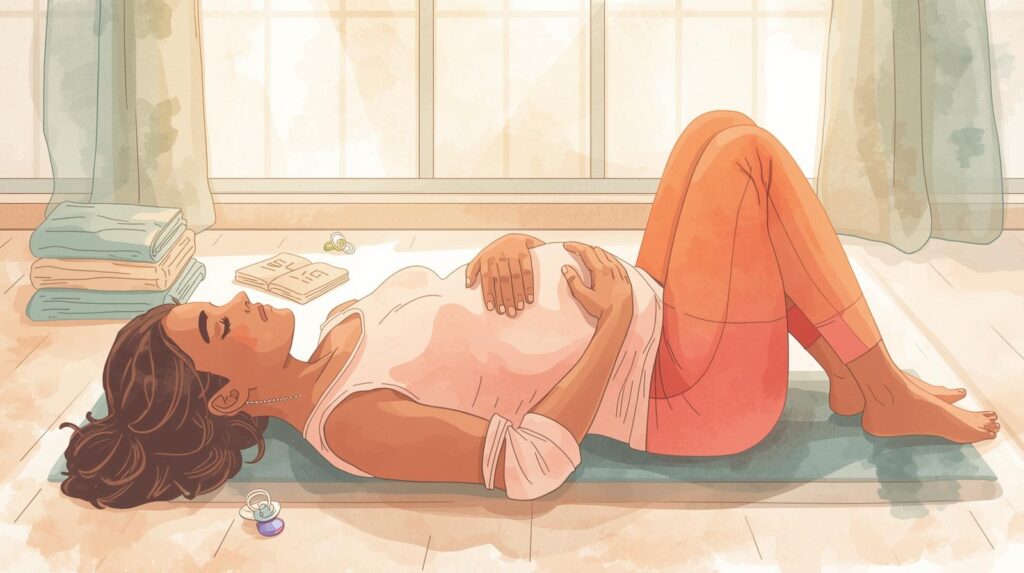
Welcoming a new baby brings immense joy — but it also leads to significant changes in your body, particularly in the abdominal region. Many new mothers inquire about how to safely initiate Postpartum Belly Fat Exercises or whether they can participate in Tummy flattening exercises after giving birth. The encouraging news is that with the appropriate approach, it is possible to restore core strength and address abdominal separation (diastasis recti) without the risk of injury. This article outlines safe, research-backed strategies to strengthen your midsection as part of a comprehensive Postpartum fitness regimen.
Furthermore, experts highlight that the process of healing and strengthening your abdomen transcends mere aesthetics — it is fundamentally about restoring functionality, alleviating back pain, and enhancing pelvic stability. CDC
Understanding Your Postpartum Core
Pregnancy exerts considerable strain on the abdominal muscles, particularly the rectus abdominis (commonly referred to as the “six-pack” muscle), which may separate during pregnancy — a condition known as diastasis recti. This separation can lead to a “tummy pooch” and diminished core strength. CDC
It is crucial to understand that you cannot selectively reduce fat through abdominal exercises alone; rather, the focus should be on strengthening and rebuilding the muscles that enhance posture and abdominal tone. Cradlewise
Why core recovery is important
- Supports posture
- Reduces lower back pain
- Protects pelvic floor function
- Enhances mobility and stability
To safely develop tummy strength, concentrate on gentle, progressive Exercises that engage the deep core muscles, particularly the transverse abdominis — often referred to as your “corset muscle.” BabyToFit
When Can You Begin Postpartum Belly Fat Exercises?
Commence with gentle movements as soon as your healthcare provider gives you the green light — typically within days for pelvic floor engagement and walking, and around 6–8 weeks before embarking on structured core exercises. However, individual recovery timelines can differ, and it is essential to heed your body’s signals. CDC
Early Postpartum (0–6 Weeks)
Concentrate on low-impact activities:
- Brisk walking
- Gentle pelvic tilts
- Diaphragmatic breathing
Refrain from engaging in intense abdominal exercises until you receive medical clearance. especially after a cesarean section. Antenatals
After 6–8 Weeks
Once you have been cleared, you may start to integrate more structured Postpartum tummy exercises into your Postpartum fitness plan.
Gentle Postpartum Tummy Flattening Exercises
Below is a progressive list of safe core exercises that activate deep muscles without exerting pressure on healing connective tissue.
1. Pelvic Tilts
Pelvic tilts assist in re-engaging the lower abdominal wall, aiding pelvic floor recovery, and enhancing posture. Verywell Family
How to do it:
- Lie on your back with your knees bent. Exhale and press your lower back into the floor while tucking your pelvis. Inhale to release.
2. Transverse Abdominis Activation
The transverse abdominis is your deepest core muscle, essential for flattening the tummy and stabilizing your trunk. BabyToFit
How to do it:
- Sit or lie comfortably and take a deep breath. As you exhale, gently draw your navel toward your spine while engaging your pelvic floor. Hold for 5–10 seconds, then release.
3. Heel Slides
Heel slides enhance coordination between core and leg movements without straining the abdomen. Nourish, Move, Love
How to do it:
- Lie on your back with your knees bent. Engage your core, then slide one heel along the floor while maintaining pelvic stability. Alternate sides.
4. Bent Knee Marches
This exercise promotes core stability and pelvic control without significant abdominal pressure. Nourish, Move, Love
How to do it:
- Lie on your back, engage your transverse abdominis, and gradually lift one foot to a tabletop position before lowering it back down.
5. Modified Side Planks
Modified side planks (performed on knees) effectively strengthen obliques and deep core layers once your foundation is established. Womens Conference
How to do it:
- Lie on your side with your knees bent, supporting yourself on your forearm, and slightly lift your hips. Keep your core engaged.
Exercises to Avoid Early On
Certain movements can place strain on healing abdominal muscles — particularly if you are experiencing diastasis recti.
Avoid these initially
- Traditional crunches or sit-ups
- Full planks without progression
- Double-leg lifts
- Heavy lifting that aggressively engages the core Antenatals
These activities elevate intra-abdominal pressure and may exacerbate separation instead of facilitating healing.
Exercise Progression for Postpartum tummy exercises
| Stage | Focus | Exercises |
|---|---|---|
| Early (0–6 weeks) | Gentle activation | Pelvic tilts, breathing |
| Intermediate (6–8+ weeks) | Deep core engagement | Transverse activation, heel slides |
| Advanced (8–12+ weeks) | Stability & strength | Modified side planks, bent knee marches |
Always adjust based on comfort and medical clearance.
Research Evidence Supporting Core Recovery
Research indicates that targeted core stability programs significantly diminish abdominal separation and enhance quality of life postpartum:
- A Comprehensive core stability exercise program demonstrated statistically significant improvements in diastasis recti and quality of life among postpartum women. PMC
- Randomized controlled trials suggest that structured postpartum core routines are more effective in reducing the inter-recti gap compared to traditional exercises alone. PubMed
Integrating postpartum tummy exercises Into Your Fitness Regimen
An effective Postpartum Fitness Plan emphasizes function over aesthetics. Rather than striving for an immediate “flat tummy,” concentrate on:
- Restoring proper muscle engagement
- Minimizing stress on the pelvic floor
- Enhancing posture
- Gradually increasing intensity
Incorporating cardio (such as walking), strength training, and core stability enables your body to rebuild in a holistic manner rather than solely targeting the abdominal area. CDC
Authoritative References
- ACOG – Physical Activity and Exercise During Pregnancy and Postpartum
- CDC – Pregnant & Postpartum Activity Guidelines
- Healthline – Diastasis Recti Exercises
- BabyToFit – Safe Postpartum Workouts for Core Recovery
Concluding Thoughts
Recovering the Postpartum tummy is a process that requires patience, consistency, and mindful movement rather than seeking quick solutions. Adopting well-structured postpartum tummy exercises aids in safely regaining core strength, enhancing posture, and promoting overall health. It is crucial to recognize that your core is not merely about aesthetics — it plays a vital role in daily function, balance, and overall well-being.
By integrating core stability exercises with walking, hydration, proper nutrition, and rest — all within a postpartum fitness plan — you establish a sustainable pathway toward feeling stronger and healthier each day.
FAQs about postpartum tummy exercises
Q1: When can I start postpartum tummy flattening exercises?
Begin gentle core activation once you have medical clearance, typically around 6–8 weeks after birth, depending on your recovery and delivery type. CDC
Q2: How long does it take for a postpartum belly to go down?
Safe, consistent core stability exercises can improve diastasis recti in many women over time, but progress varies. PubMed
Q3: How to Loss Postpartum tummy?
To achieve a flatter abdomen following pregnancy, concentrate on gentle core workouts (such as belly breathing and planks), a balanced diet (including fiber, lean proteins, whole foods, and proper hydration), effective stress management, sufficient sleep, and light cardiovascular activities (like walking and yoga). It is essential to prioritize consistency and steer clear of crash diets to attain gradual and healthy outcomes, all while being attentive to your body’s signals.
Q4: How to tighten a saggy belly after pregnancy?
7 strategies to firm loose skin following pregnancy
- Establish a heart-healthy regimen.
- Consume nutritious fats and proteins.
- Dedicate yourself to strength training.
- Stay hydrated by drinking water.
- Utilize oils for massage.
- Explore skin-firming products.
- Think about spa wraps.
Q5: How do celebrities not have loose skin after pregnancy?
In practice, celebrities frequently choose the most suitable treatment based on the extent of their loose skin following pregnancy. A significant number lean towards non-invasive options such as radiofrequency, microneedling, and ultrasound due to the minimal recovery time, allowing them to resume their daily activities more quickly.