
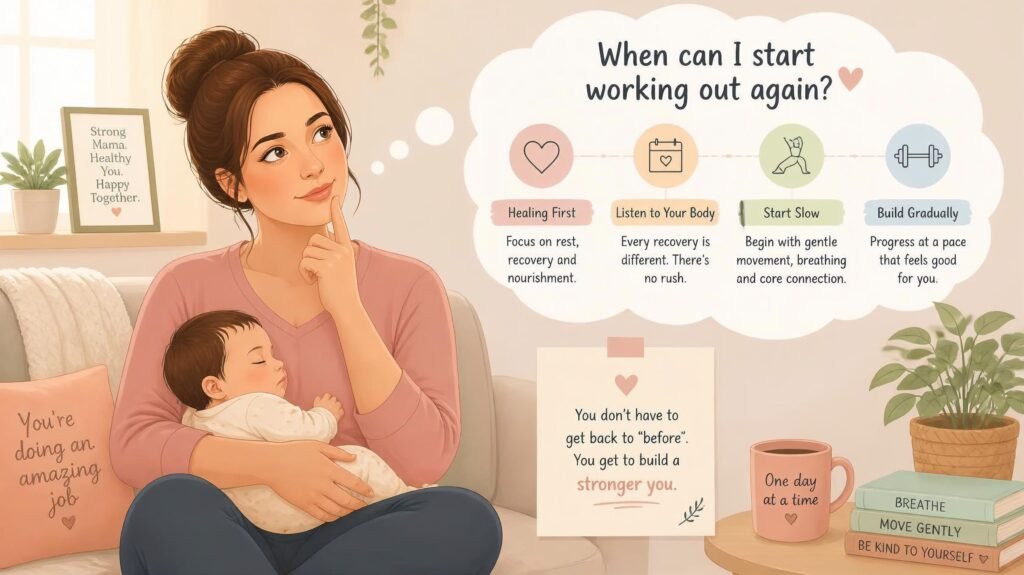
Welcoming a new baby brings incredible joy, but it also leaves your body feeling completely different than before. If you’re wondering when to start postpartum workouts, you’re not alone. Many new moms feel a rush to get moving again, while others feel unsure about what is actually safe for their healing body. The truth is, jumping back into high-impact exercises too quickly can lead to issues like pelvic floor dysfunction or diastasis recti. However, starting gentle movement early can actually speed up your recovery. The key is knowing when and how to transition safely from basic rest to full workouts. If you want a complete, week-by-week recovery plan tailored for moms, check out our Ultimate Postpartum Fitness Guide to safely rebuild your strength from the ground up.
Understanding Postpartum Recovery Before Workouts
After giving birth, your body needs time to heal. The first few weeks are about rest, recovery, and bonding with your baby. Jumping into workouts too early can cause strain, so patience is key. Remember, postpartum fitness is not about rushing—it’s about restoring your strength gently.
Want a complete recovery and fitness roadmap?
Read our full guide on the Postpartum Fitness Plan to discover safe workouts, recovery tips, and lifestyle habits that help you heal and stay strong after childbirth.
When to Start Postpartum Workouts: The Right Time
Generally, women who had a vaginal delivery can begin light exercises like walking or stretching after about 4–6 weeks, but those who had a C-section may need more time—often 8–10 weeks or until their doctor approves.
The best rule? Always get your doctor’s approval before starting any postpartum exercise routine. Every woman’s recovery is different, so listening to your body is essential.
Signs You’re Ready to Begin Postpartum Workouts
Before jumping into any exercise routine, take a moment to assess how your body feels. You are likely ready to start easing into postpartum workouts safely if:
- Your Postpartum Bleeding (Lochia) Has Stopped Completely: Light spotting or normal discharge is fine, but active red bleeding should be totally finished. Increased bleeding after physical activity is a direct signal from your body that your uterus is still healing and you need more rest.
- You Are Free from Pelvic Pain, Pressure, or Heaviness: You shouldn’t feel any aching, discomfort, or a “dragging” sensation in your pelvic area, lower abdomen, or back. These symptoms often point to pelvic floor strain or weakness, meaning your core isn’t quite ready for added physical stress yet.
- You Can Move Comfortably Throughout Your Daily Routine: Everyday tasks—like walking around the house, bending over to pick up your baby, climbing stairs, or carrying a diaper bag—should feel painless and natural, without leaving you feeling exhausted or sore.
- You Have Received Official Medical Clearance from Your Doctor: You’ve attended your 6-week (or 8-week) postpartum checkup, and your healthcare provider or midwife has evaluated your recovery, checked for issues like diastasis recti, and given you the green light to exercise.
If you can confidently check off all of these boxes, your body has laid a solid foundation for recovery—and you are ready to begin introducing safe, low-impact postpartum movements!
Gentle Exercises to Begin With
When beginning your postpartum fitness journey, the key is to take a slow, steady, and compassionate approach. Your body has been through an incredible transformation, so giving yourself time to rebuild baseline strength before pushing your limits is essential.
Here are a few safe, gentle exercise options to help you get started:
- Pelvic floor (Kegel) exercises: Engaging and relaxing these vital muscles helps restore control, rebuild deep core stability, and support your internal organs as you heal.
- Walking: An ideal low-impact cardiovascular activity that gently boosts circulation, improves mood, and helps rebuild physical stamina without overstressing your joints.
- Light stretching: Gentle flexibility work releases tension in tight areas—like your lower back, neck, and shoulders—while promoting full-body relaxation.
- Deep diaphragmatic breathing: Focused breathing patterns encourage proper core activation, reconnect you with your abdominal wall, and calm your nervous system.
As your body heals and feels noticeably stronger over time, you can gradually transition from these gentle movements to more challenging exercises at a pace that feels comfortable for you.
Tips for Safe Postpartum Workouts
Start Small and Progress Slowly: Begin with simple, low-impact movements like gentle pelvic floor contractions or short daily walks. Avoid the urge to jump straight into intense routines; give your tissues and muscles adequate time to heal before gradually increasing your workout duration or weight.
Focus on Proper Breathing and Posture: Pay close attention to how you align your spine and breathe during movement. Inhale deeply into your ribs to avoid unnecessary pressure on your abdomen, and practice exhaling while engaging your core during effort to protect against diastasis recti and pelvic floor strain.
Stay Hydrated Throughout Your Workout: Keep a water bottle nearby and sip frequently before, during, and after exercise. Proper hydration is essential for muscle recovery, maintaining overall energy levels, and keeping up a healthy supply if you are nursing.
Wear Comfortable Clothes and Supportive Shoes: Choose breathable, non-restrictive workout gear that accommodates your changing body, along with a supportive sports bra. Sturdy, well-fitting footwear helps stabilize your joints, which may still feel loose due to lingering pregnancy hormones.
Rest Whenever Your Body Needs a Break: Listen closely to the signals your body gives you—such as dizziness, unusual pain, or extreme fatigue. Taking rest days or stopping early is not a setback; it is a critical part of letting your body repair itself properly.
Remember, Consistency is More Important Than Intensity: Showing up for a gentle, 10-minute session every few days builds sustainable momentum far better than forcing one grueling, high-intensity workout that leaves you exhausted or injured.
Benefits of Starting Postpartum Workouts at the Right Time
Improved Muscle Strength and Posture: Gentle postpartum movement gradually reactivates deep core muscles, glutes, and upper back strength. Rebuilding these muscle groups helps realign your body after months of carrying pregnancy weight, making daily tasks—like holding, lifting, and nursing your baby—much easier on your joints.
Reduced Back and Pelvic Pain: Targeted, low-impact exercises stabilize your pelvis and relieve tension in your lower back. By strengthening the pelvic floor and stabilizing muscles, you reduce the aches, stiffness, and discomfort commonly caused by altered post-pregnancy mechanics.
More Energy and Better Sleep: Even light, regular activity boosts blood circulation and triggers natural energy production to combat everyday mom fatigue. Physical movement also helps regulate your sleep cycles, allowing you to enjoy deeper, more restorative rest whenever you get the chance to sleep.
Boosted Mood and Mental Health: Exercise releases endorphins and neurotransmitters that act as natural mood lifters. Carving out just a few minutes of daily movement helps ease postpartum stress and anxiety, offering a mental reset and a well-deserved boost in overall emotional well-being.
Faster Return to Pre-Pregnancy Fitness Levels: Consistently practicing safe, foundational exercises lays a strong groundwork for long-term recovery. By taking a deliberate, step-by-step approach now, you rebuild your stamina and strength safely, setting yourself up to return to your favorite workouts much faster and without injury.
What to Avoid in Early Postpartum Workouts

Avoid heavy lifting, crunches, or high-impact workouts too soon. These can put too much pressure on your healing muscles and joints. Wait until your body feels stronger and your doctor approves more intense routines.
For complete guidance
When to Stop or Pause Workouts
If you notice bleeding, pain, or dizziness during your workout, stop immediately. These are signs your body needs more rest. Restart only when you feel ready and after consulting your healthcare provider.
Want a complete recovery and fitness roadmap?
Read our full guide on the Postpartum Fitness Plan to discover safe workouts, recovery tips, and lifestyle habits that help you heal and stay strong after childbirth.
Recommended References on When to Initiate Postpartum Workouts

ACOG – Physical Activity & Exercise During the Postpartum Period
The American College of Obstetricians & Gynecologists recommends that, after delivery, exercise can be resumed gradually once medically safe. Some women may even begin very light activity within a few days, depending on how they delivered and whether there were complications.
ACOG+1
Mayo Clinic – Exercise After Pregnancy
According to the Mayo Clinic, for uncomplicated vaginal deliveries, it’s generally safe to start gentle activity (like walking) a few days postpartum; after a C-section or complicated birth, more caution and doctor-approval is required.
Mayo Clinic
HPRC (Military Fitness) – Postpartum Exercise Tips
The Health and Performance Research Center suggests waiting around 4–8 weeks postpartum before returning to fuller activity, and recommends starting with walking and bodyweight exercises first.
HPRC-online.org
UT Southwestern Medical Center – When to Resume Running or Weight Training
Their guidance warns that high-intensity workouts like running or lifting should typically wait until at least 12 weeks postpartum to allow proper healing and reduce risk of injury.
UT Southwestern Medical Center
Qian et al. (BMC Pregnancy & Childbirth, 2021)
This research paper reviewed postpartum exercise interventions and noted that some studies began exercise as early as 72 hours after delivery, but clinically they recommended exercise protocols starting around 6 weeks postpartum for muscle-toning activities.
BioMed Central
Ideafit – Pregnancy & Postpartum Exercise Guidelines
According to PT and fitness experts, gentle walking may begin in the first 1–2 weeks, but more structured abdominal work typically waits until 6 weeks, depending on healing, especially after a C-section.
IDEA Health & Fitness Association
Mother.ly / Physiotherapist-Endorsed Guidelines
Citing updated recommendations, many professionals advise waiting 12 to 16 weeks before returning to high-impact activities to protect the pelvic floor and minimize risk of injury.
Motherly+1
Ministry of Health (Malaysia) Postpartum Exercise Guidelines
In its postpartum recovery guide, the MOH notes that in some interventions exercise has been started as early as 72 hours after delivery, but emphasizes that intensity and progression should be very individualized.
Ministry of Health Malaysia
Final Thoughts
Knowing when to start postpartum workouts isn’t about following a strict, rigid timeline—it’s about listening to your body and giving yourself grace. While the standard 6-week medical checkup is a great milestone, clearing that hurdle doesn’t mean you have to rush right into heavy lifting or intense cardio. Take it one day at a time, focus on core and pelvic floor connection first, and stop immediately if you feel pain, extreme fatigue, or unusual bleeding. Rebuilding your fitness after baby is a marathon, not a sprint, and your body has already done incredible work. Ready to take the next step safely? Head over to our Comprehensive Postpartum Fitness & Recovery Blog for expert-backed exercise routines, safety checklists, and daily tips designed to help you feel strong and confident again!
FAQs
Q1. Can I start postpartum workouts right after delivery?
No, it’s best to wait until your doctor says it’s safe—usually after 4–6 weeks.
Q2. What exercises should I start with?
Begin with gentle activities like walking, stretching, and Kegels.
Q3. How do I know if I’m overdoing it?
If you feel pain, bleeding, or fatigue, stop and rest immediately.
Q4. Can I do postpartum workouts while breastfeeding?
Yes, light to moderate workouts are safe. Just stay hydrated.
Q5. What’s the main benefit of starting postpartum workouts?
They help rebuild strength, improve mood, and support overall recovery.