
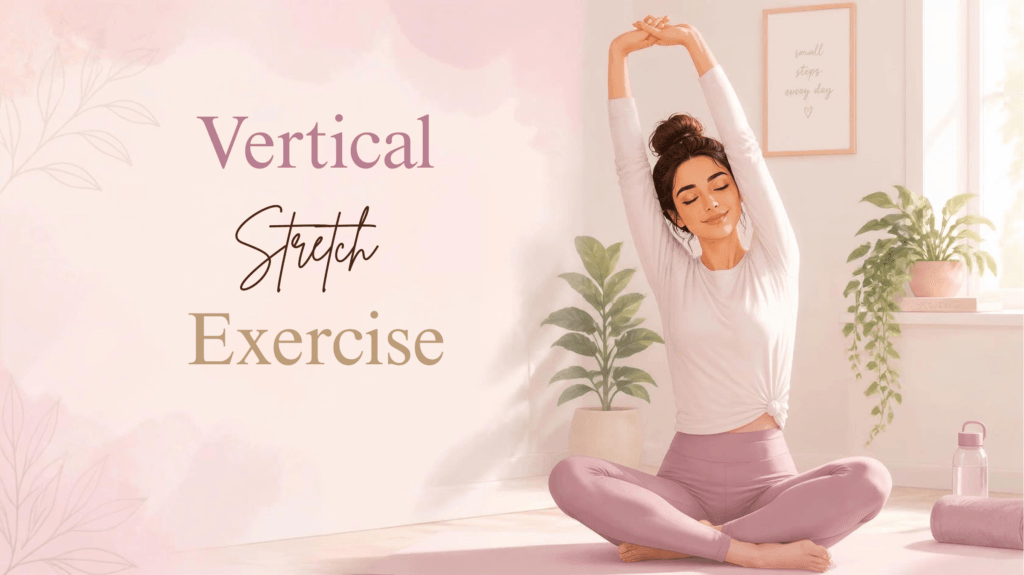
If you find yourself feeling stiff and tight after sitting at a desk for hours, or if you’re actively searching for an easy way to decompress your spine and fix poor posture, you are not alone. Daily sitting and slouching pull the spine out of alignment, which leads to chronic upper back stiffness, rounded shoulders, and severe fatigue. Performing a vertical stretch exercise on a regular basis is one of the simplest, most powerful ways to counteract these daily stresses. By reaching overhead and actively extending your spine, a proper vertical stretch exercise counteracts gravity, opens up a tight chest, and creates vital space between your spinal discs, providing immediate relief to overworked muscles.
Even better, this stretch works best when it’s part of a consistent movement habit. If you’re looking to build a sustainable mobility practice, consider incorporating it into a broader daily stretching routine that supports posture, flexibility, and overall body function. In this guide, you’ll learn exactly how the vertical stretch works, its key benefits, and how to perform it correctly for maximum results.
In this guide, you’ll learn what a vertical stretch is, how to perform it correctly, its biggest benefits, common mistakes to avoid, and a quick routine you can start using today.
What Is a Vertical Stretch?
A vertical stretch exercise is a simple movement that involves reaching upward through the body while maintaining proper alignment. The goal is to create length from your feet through your fingertips, encouraging the spine and surrounding muscles to extend naturally.
This movement primarily targets:
- Spine and back muscles
- Shoulders
- Chest
- Core muscles
- Neck
- Upper body connective tissues
The stretch works by gently decompressing the body and encouraging better posture. As you reach upward, tight muscles begin to lengthen while stiff joints gain mobility.
A standing vertical stretch exercise is especially useful because it mimics the body’s natural upright position and can be performed almost anywhere.
Who Should Perform It?
This stretch is beneficial for:
- Office workers
- Students
- Athletes
- Older adults
- Anyone experiencing stiffness from inactivity
Quick Tip
Every hour, stand up and perform a 20-second vertical body stretch exercise. This simple habit can reduce tension before it builds up.
9 Benefits of Vertical Stretch Exercise
The vertical stretch benefits extend far beyond simply feeling looser. Here are nine ways this movement can improve your daily comfort and movement quality.
1. Improves Posture
Reaching upward encourages proper spinal alignment and helps reverse the rounded posture commonly caused by sitting.
2. Reduces Back Stiffness
Lengthening the spine helps decrease feelings of tightness and compression, especially in the upper and middle back.
3. Enhances Flexibility
Regular stretching helps muscles become more adaptable and improves overall movement capacity.
4. Increases Mobility
Better mobility allows joints and muscles to move more efficiently during daily activities.
5. Improves Circulation
Stretching encourages blood flow throughout the body, helping muscles receive oxygen and nutrients.
6. Relieves Shoulder Tension
Many people carry stress in their shoulders. A full body vertical stretch helps release built-up tightness.
7. Improves Movement Quality
When muscles are less restricted, everyday movements become smoother and more comfortable.
8. Supports Exercise Performance
Improved mobility and flexibility can enhance movement efficiency during workouts and sports.
9. Reduces Stress
Deep breathing combined with stretching promotes relaxation and can help calm the nervous system.
Practical Tip
Use a vertical stretch for posture during work breaks. Set a timer every 60 minutes and perform the stretch for 20–30 seconds.
How to Do a Vertical Stretch Exercise (Step-by-Step)
Follow these simple steps to perform a vertical stretch exercise correctly.
1. Stand Tall
Place your feet about hip-width apart.
Keep your weight evenly distributed.
2. Raise Your Arms Overhead
Slowly lift both arms toward the ceiling.
Keep your shoulders relaxed.
3. Lengthen Through the Spine
Imagine someone gently pulling you upward from the top of your head.
Reach through your fingertips without straining.
4. Breathe Deeply
Take slow breaths through your nose.
Expand your ribs as you inhale.
Relax as you exhale.
5. Hold and Release
Hold the position for 15–30 seconds.
Slowly lower your arms and return to a neutral stance.
Proper Form Tips
- Keep shoulders away from ears.
- Maintain a neutral spine.
- Engage your core lightly.
- Keep knees relaxed.
Common Mistakes
- Arching the lower back
- Locking the knees
- Holding the breath
- Shrugging the shoulders
Common Problems a Vertical Stretch Can Help Solve
Desk Worker Example
Sitting for extended periods often causes:
- Rounded shoulders
- Forward head posture
- Upper back stiffness
- Tight chest muscles
A vertical stretch for posture helps reverse these effects by encouraging better alignment and opening the front of the body.
Recommendation: Perform a stretch every hour during work.
Athlete Example
Training can create muscle tightness, particularly in:
- Shoulders
- Back
- Hips
- Core
A vertical stretch for flexibility helps restore balance and maintain healthy movement patterns.
Recommendation: Use it during warm-ups or cooldowns.
Senior Adult Example
Mobility naturally declines with age.
Regular stretching can help:
- Maintain balance
- Improve posture
- Reduce stiffness
- Support daily movement
Recommendation: Perform gentle stretches daily with controlled breathing.
Vertical Stretch Variations
| Beginner Version | Advanced Version |
|---|---|
| Basic overhead reach | Side-reaching stretch |
| Seated vertical stretch | Full body extension |
| Wall-supported stretch | Dynamic reach variation |
Basic Overhead Reach
Ideal for beginners and office workers.
Seated Vertical Stretch
Perfect for those with balance concerns or limited mobility.
Wall-Supported Stretch
Provides additional stability while improving posture awareness.
Side-Reaching Stretch
Adds flexibility benefits for the sides of the torso.
Full Body Extension
Creates a stronger stretch throughout the entire body.
Dynamic Reach Variation
Suitable for active individuals looking to improve mobility before exercise.
If the Stretch Feels Uncomfortable
| Problem | Possible Cause | Solution |
| Shoulder tension | Overreaching | Relax shoulders |
| Lower back discomfort | Arching excessively | Engage core muscles |
| Loss of balance | Poor stance | Widen foot position |
| No stretch felt | Limited reach | Focus on lengthening upward |
If discomfort persists, reduce intensity and consult a healthcare professional.
Common Mistakes to Avoid

Avoid these common errors when performing a standing vertical stretch:
Holding Your Breath
Breathing helps muscles relax and stretch effectively.
Shrugging Your Shoulders
Keep shoulders down and relaxed.
Arching the Lower Back
Maintain a neutral spine throughout the movement.
Rushing Through the Stretch
Slow, controlled movement produces better results.
Forcing the Stretch
Stretching should feel gentle, not painful.
Safety Tips Before Performing a Vertical Stretch Exercise

Although stretching is generally safe, consider these guidelines.
When to Avoid Stretching
Avoid stretching if you have:
- Acute injuries
- Severe pain
- Recent surgery
- Medical restrictions from a healthcare provider
Consider Existing Injuries
Modify the movement if you have shoulder, neck, or back issues.
Focus on Breathing
Never hold your breath during a stretch.
Maintain Proper Alignment
Good posture during stretching helps prevent unnecessary strain.
60-Second Vertical Stretch Routine
Need a quick reset during the day? Try this simple vertical stretch routine.
20 Seconds: Overhead Reach
Raise both arms overhead and lengthen through the spine.
20 Seconds: Side Reach
Reach one arm overhead and gently lean to the side.
Switch sides after 10 seconds.
20 Seconds: Deep Breathing Stretch
Return to center.
Reach upward while taking slow, deep breaths.
This simple daily stretching routine takes only one minute and can be performed almost anywhere.
Authoritative References (Vertical Stretch Exercise)

1. Stretching Reduces Musculoskeletal Discomfort in Office Workers
Research published in the Brazilian Journal of Physical Therapy found that regular stretching exercises helped reduce neck, shoulder, and lower back discomfort in office workers, supporting the use of simple stretches throughout the workday. PUBMED +1
2. Workplace Stretching Improves Mobility and Comfort
Studies on workplace stretching programs suggest that regular stretching may improve mobility and reduce common discomfort associated with prolonged sitting. Springer link +1
3. Stretching Improves Range of Motion and Flexibility
A large systematic review found that stretching interventions consistently improve flexibility and joint range of motion, supporting their role in mobility-focused fitness routines. Springer Link
4. Stretching Can Influence Posture
Recent research suggests that targeted stretching programs may contribute to posture improvements when performed consistently as part of a broader exercise routine. PubMed
5. Stretching Supports Spinal Mobility
Studies examining spinal flexibility have shown that stretching can enhance spinal mobility, which may help counteract stiffness caused by prolonged inactivity. Springer link
While researchers have not specifically studied the vertical stretch as a standalone exercise, evidence shows that stretching programs can improve flexibility, mobility, posture-related outcomes, and musculoskeletal comfort. The vertical stretch incorporates many of the same movement patterns used in these evidence-based stretching interventions. PubMed +2
Frequently Asked Questions (Vertical Stretch)
1. What does a vertical stretch do?
A vertical stretch exercise lengthens the spine, improves posture, reduces muscle tension, and enhances flexibility and mobility.
2. Is a vertical stretch good for posture?
Yes. It encourages proper spinal alignment and helps counteract rounded shoulders caused by prolonged sitting.
3. Can it reduce back pain?
A vertical stretch for back pain may help relieve stiffness and tension that contribute to discomfort. However, persistent pain should be evaluated by a healthcare professional.
4. How long should I hold the stretch?
Most people benefit from holding the stretch for 15–30 seconds while breathing deeply.
5. How often should I do a vertical stretch?
Daily practice is ideal. Many people find the greatest benefits by performing the stretch several times throughout the day.
Conclusion (Vertical Stretch Exercise)
The vertical stretch exercise is a simple movement, but its impact can be significant. By helping improve posture, reduce muscle tension, increase flexibility, and relieve everyday stiffness, it offers an easy way to support better movement and comfort throughout the day.
The key to lasting results is consistency. Performing this stretch regularly can help counteract the effects of prolonged sitting, repetitive movements, and daily stress. Even a minute or two of stretching can contribute to better mobility and improved body awareness over time.
For even greater benefits, consider making the vertical stretch part of a complete daily stretching routine. Combining multiple stretches throughout the day can help maintain flexibility, support healthy posture, and keep your body moving efficiently. Small daily habits often create the biggest long-term improvements, making stretching one of the simplest investments you can make in your overall well-being.
Ready to Feel Better?
Ready to feel less stiff and move more comfortably? Add this simple vertical stretch routine to your day and start improving your posture, flexibility, and overall mobility in just a few minutes.