
What Is the Psoas Muscle & Why It Matters After Pregnancy?
The postpartum Psoas stretch is among the most crucial exercises for recuperating your body following childbirth. The psoas muscle, a deep core muscle, links your lower spine to your hips. It significantly contributes to posture, walking, and core stability.
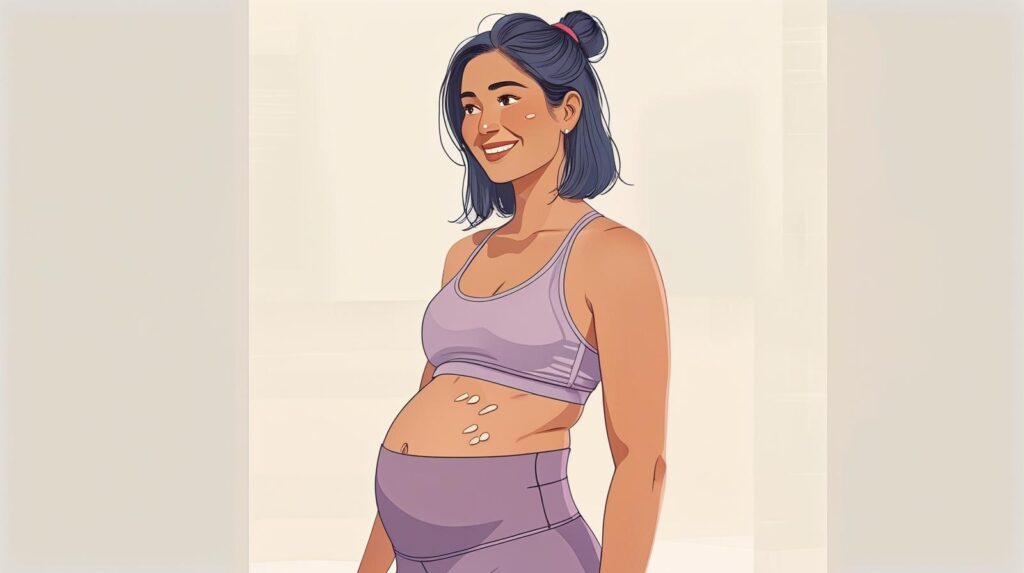
As your belly expands during pregnancy, it alters your posture, causing a forward shift. This results in the shortening and tightening of the psoas muscle. Following delivery, this tightness may result in lower back pain, hip stiffness, and suboptimal posture. Therefore, incorporating a postpartum psoas stretch routine is vital for recovery.
A consistent postpartum psoas stretch routine aids in alleviating tension, enhancing flexibility, and reinstating natural movement. Numerous women experience immediate relief in their hips and back upon initiating this stretch.
This exercise pairs well with our low-impact postpartum workouts, assisting you in establishing a safe and effective recovery regimen.
For comprehensive recovery, merge your postpartum psoas stretch routine with a well-structured Postpartum Fitness Program tailored specifically for new mothers.
Regardless of whether you are weeks or months postpartum, regularly practicing the psoas stretch postpartum can enhance your comfort, posture, and strength.
Benefits of Psoas Stretch After Pregnancy
The psoas stretch focuses on your deep hip flexor muscle, which is essential for new mothers who are experiencing tightness due to pregnancy and the demands of holding a baby. Below are the primary benefits:
- Alleviates Lower Back Pain: It alleviates tension that pulls your spine forward (research indicates a notable reduction in pain for C-section mothers)
- Enhances Hip Mobility: It helps to counteract stiffness resulting from extended periods of sitting while breastfeeding
- Aids in Pelvic Floor Recovery: A relaxed psoas decreases pressure on pelvic muscles and assists with diastasis recti
- Improves Posture: It helps to correct anterior pelvic tilt, which is often seen after pregnancy
- Increases Core Stability: It enables weak abdominal muscles to engage effectively without compensatory movements
- Mitigates Sciatic Pain: It relieves nerve compression caused by tight hip flexors
- Prepares for Physical Activity: It is a crucial initial step before engaging in low-impact postpartum exercises
- Enhances Walking: It helps to restore the natural gait that may have been altered by weight changes during pregnancy
- Provides Mental Stress Relief: Opening the hips soothes the nervous system (with the added benefit of 360° breathing)
How to Do Psoas Stretch (Step-by-Step)
Here is the safe technique for the postpartum psoas stretch:
- Begin by kneeling on your right knee with your left foot positioned forward (in a lunge stance), placing your hands on your left knee for stability.
- Tuck your pelvis under (engaging your right glute) to safeguard your lower back—this is crucial for postpartum safety.
- Gently shift your hips forward until you experience a stretch in the front of your right hip (the psoas region).
- Maintain an upright torso, keep your shoulders relaxed, and breathe deeply for a duration of 30 seconds.
- Switch sides and repeat this process 2-3 times daily.
Postpartum Modifications:
- For those who have had a Vaginal birth 6 weeks ago: Full stretch is permissible with a doctor’s approval.
- For C-section recovery: Ensure your back knee is padded and limit holds to shorter durations (15 seconds).
- In the case of diastasis recti: Lightly engage your core and avoid arching your lower back.
Quick Tip
As you perform your psoas stretch after childbirth, take slow breaths and maintain a slight engagement of your core. You ought to experience a stretch in your hip, but not discomfort.
Modifications for C-Section Moms
| Level | Modification | How to Perform | Safety Focus |
|---|---|---|---|
| Beginner | Supported Standing Lunge | Hold a chair, step one foot back, gently push hips forward | Keeps pressure off core and incision |
| Beginner | Cushion Kneeling Stretch | Place back knee on a pillow, keep torso upright | Adds comfort and reduces strain |
| Intermediate | Kneeling Lunge Stretch | Move into low lunge and shift hips forward slowly | Light core engagement for support |
| Intermediate | Wall-Assisted Stretch | Place back leg against wall, stay upright | Improves balance and control |
Tip: Begin gradually and only advance when your postpartum psoas stretch feels comfortable and free of pain.
When to Avoid?
- Acute pain in the abdominal or pelvic region
- Unhealed incision from a C-section
- Intense discomfort in the lower back
- The physician has limited mobility
- Experiencing dizziness while exercising
Authoritative Sources (Postpartum Psoas Stretch)

- American College of Obstetricians and Gynecologists – Exercise During Pregnancy & Postpartum
ACOG guidance on safely resuming activity after pregnancy.
- Mayo Clinic – Exercise After Pregnancy: How to Get Started
Mayo Clinic advice on postpartum exercise progression and safety.
- ACOG Infographic – Exercises You Can Do After Pregnancy
ACOG resource with postpartum exercise illustrations and tips.
- Good-Rx – Postpartum Workout Plan Tips
Practical suggestions on easing back into movement post‑birth (ACOG referenced).
Conclusion
Integrating a psoas stretch into your daily routine after childbirth can significantly alleviate hip tension, enhance posture, and aid in overall recovery. It is important to begin gently, pay attention to your body’s signals, and progressively increase the intensity as your muscles regain their strength.
To adopt a more comprehensive strategy for safely rebuilding strength, this stretch complements our [low impact postpartum exercises] exceptionally well. Merging these routines guarantees that your hips, core, and pelvic floor recover efficiently while ensuring that your workouts remain safe and gentle.
Maintain consistency, practice mindfulness in your movements, and take pleasure in the journey of restoring flexibility and comfort after childbirth!
Start Your Full Recovery Today
Are you prepared to experience increased strength and a pain-free life?
Enroll in our Postpartum Fitness Program to safely restore your strength. Access all the stretches and routines included in our program, and integrate them with low-impact postpartum exercises for optimal results.
Unlock Your Free Psoas Stretch Postpartum PDF!
Take the guesswork out of postpartum recovery. Download our free step-by-step Psoas Stretch plan with C-section modifications and start improving hip mobility today!
FAQs
How often should I do psoas stretch postpartum?
For optimal results, it is advisable to do it on a daily basis.
Is psoas stretch postpartum safe?
Indeed, it is safe when executed gently and correctly
Can I do psoas stretch after pregnancy with a C-section?
Yes, however, this should only be done after receiving medical clearance.
Why is my psoas tight after pregnancy?
Changes in posture during pregnancy can lead to the shortening of the muscle.
Does psoas stretch help back pain?
Yes, it helps to alleviate tension in the lower back.