
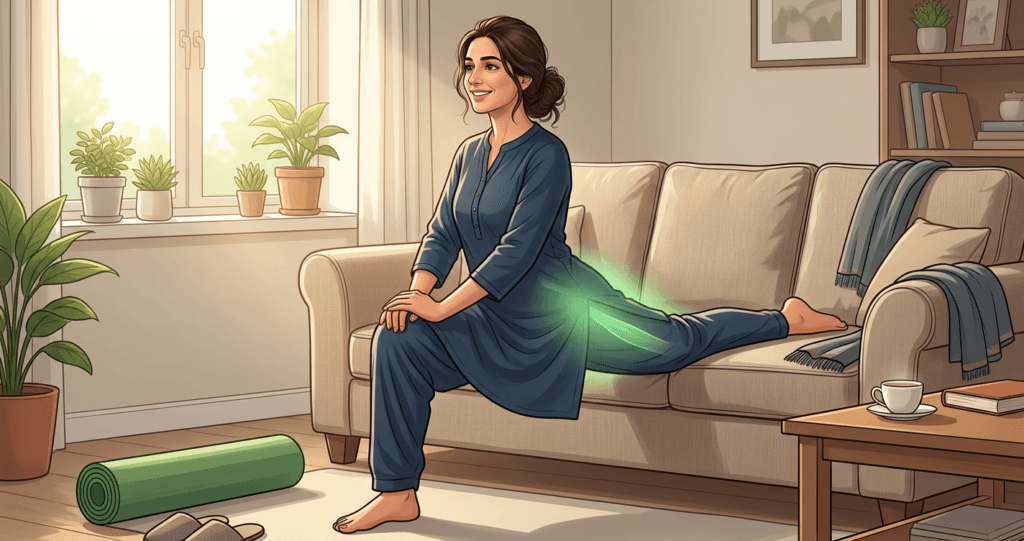
The couch stretch is one of the most effective ways to fix tight hips and reduce lower back pain caused by sitting too long. If you spend hours at a desk, drive often, or recently went through pregnancy, your hip flexors may feel stiff and uncomfortable.
A controlled study found that a hip flexor stretching program significantly improves hip extension range of motion, which is the main purpose of the couch stretch. PubMed
Tight hips don’t just affect flexibility—they can also lead to poor posture and chronic discomfort. That’s where the couch stretch comes in. It targets the hip flexors deeply, helping release tension and improve movement.
The best part? You don’t need a gym. This simple stretch can be done at home using a wall or couch. This stretch works perfectly as part of a complete [daily stretching routine for women], especially if you want long-term relief and better mobility.
In this guide, you’ll learn exactly how to do the couch stretch, its benefits, and how to use it safely for maximum results.
7–9 Benefits of Couch Stretch
The couch stretch offers powerful benefits for both beginners and active individuals:
- Provides fast tight hips relief
- Reduces lower back pain and stiffness
- Improves posture by opening the hips
- Enhances flexibility and mobility
- Supports better movement during workouts
- Helps relieve tension from prolonged sitting
- Improves balance and body alignment
- Aids in recovery after exercise
- Boosts overall comfort in daily activities
Adding this hip flexor stretch to your routine can make everyday movements easier and pain-free.
How to Do Couch Stretch (Step-by-Step)
Follow these simple steps to perform the couch stretch correctly:
1. Set Up Your Position
Kneel on the floor with your back facing a wall or couch. Place one knee close to the wall and your foot resting against it.
2. Step Forward with the Other Leg
Bring your opposite foot forward into a lunge position. Keep your front knee aligned over your ankle.
3. Straighten Your Upper Body
Slowly lift your torso upright. Keep your chest open and avoid leaning forward.
4. Engage Your Core
Tighten your core slightly to protect your lower back and improve balance.
5. Hold and Breathe
Hold the stretch for 20–30 seconds, then switch sides. Repeat 2–3 times.
👉 Safety Tip:
Start gently. If you feel too much pressure, move your knee slightly away from the wall.
Common Mistakes to Avoid

To get the most from the couch stretch, avoid these mistakes:
1. Arching Your Lower Back Too Much
One of the biggest mistakes is over-arching the lower back instead of stretching the hips.
👉 Why it’s a problem:
This shifts the stretch away from your hip flexors and puts pressure on your spine.
✅ Fix:
Keep your core slightly engaged and your torso upright. Focus on lengthening, not bending.
2. Pushing Too Deep Too Quickly
Many beginners try to force a deep stretch right away.
👉 Why it’s a problem:
This can strain your muscles and cause pain, especially if your hips are very tight.
✅ Fix:
Start with a gentle range of motion and gradually increase intensity over time.
3. Incorrect Knee Position
Placing your knee too close to the wall too soon can make the stretch too intense.
👉 Why it’s a problem:
It may cause discomfort in the knee or hip joint.
✅ Fix:
Begin with your knee slightly away from the wall and adjust as your flexibility improves.
4. Letting the Front Knee Move Too Far Forward
Your front knee should stay aligned with your ankle.
👉 Why it’s a problem:
Poor alignment can strain your knee and reduce the effectiveness of the stretch.
✅ Fix:
Keep your front shin vertical for better balance and safety.
5. Leaning Forward Instead of Staying Upright
Some people lean forward to reduce discomfort.
👉 Why it’s a problem:
This reduces the stretch on the hip flexors and limits results.
✅ Fix:
Keep your chest lifted and torso upright to target the correct muscles.
6. Holding Your Breath
Breathing is often ignored during stretching.
👉 Why it’s a problem:
Holding your breath creates tension and makes the stretch less effective.
✅ Fix:
Take slow, deep breaths to help your muscles relax and stretch deeper naturally.
7. Skipping Warm-Up
Jumping straight into the couch stretch without warming up can increase stiffness.
👉 Why it’s a problem:
Cold muscles are less flexible and more prone to strain.
✅ Fix:
Do a quick warm-up like light walking or gentle movements before stretching.
8. Ignoring Pain Signals
A stretch should feel uncomfortable—but not painful.
👉 Why it’s a problem:
Sharp pain may indicate injury or overstretching.
✅ Fix:
If you feel pain, ease off immediately and adjust your position.
9. Being Inconsistent
Doing the stretch once in a while won’t give lasting results.
👉 Why it’s a problem:
Flexibility improves with regular practice, not occasional effort.
✅ Fix:
Include the couch stretch in your daily routine for steady progress.
Avoiding these mistakes will help you get the full couch stretch benefits, including better flexibility, improved posture, and long-term relief from tight hips and lower back pain.
Couch Stretch Variations for Beginners

If the standard couch stretch feels too intense, try these beginner-friendly options:
Wall Support Version
Place your hands on a wall for balance and reduce pressure on your hips.
Cushion Support Version
Use a pillow or folded towel under your knee for extra comfort.
Light Stretch Version
Keep your knee farther from the wall to reduce intensity.
These variations make it easier to include the stretch in your home stretching exercises routine.
When to Do Couch Stretch for Best Results
Timing matters when it comes to stretching.
Morning
Helps loosen stiff muscles and improves mobility for the day.
After Work
Perfect for releasing tension caused by long sitting hours.
Before or After Workouts
- Before: improves flexibility
- After: supports recovery
For best results, stay consistent. This stretch works perfectly as part of a complete [daily stretching routine for women], especially when done regularly.
Who Should Avoid Couch Stretch

Although the couch stretch is safe for most people, some should be cautious:
- People with knee injuries
- Those with severe lower back pain
- Postpartum women (consult a doctor first)
- Individuals with hip injuries
Always listen to your body and modify the stretch if needed.
FAQs About Couch Stretch
1. What does couch stretch help with?
The couch stretch helps relieve tight hips, improve posture, and reduce lower back pain.
2. How long should I hold it?
Hold the stretch for 20–30 seconds per side, repeating 2–3 times.
3. Is couch stretch safe daily?
Yes, it is safe when done with proper form and not pushed too hard.
4. Does couch stretch fix back pain?
It can help reduce back pain caused by tight hip flexors and poor posture.
5. Can beginners do couch stretch?
Yes, beginners can start with modified versions and gradually increase intensity.
Research on Couch Stretch / Hip Flexor Stretching

1. Stretching Increases Hip Extension & Balance
Research comparing hip flexor stretching techniques showed significant improvements in hip extension flexibility and balance performance after consistent stretching. PubMed
2. Hip Flexor Stretching Improves Mobility & Gait
A clinical trial found that a structured hip flexor stretching program improves walking mechanics, stride length, and hip extension during movement. PubMed
3. Stretching Improves Hip Flexibility and Function
A study showed that daily hip flexor stretching improves hip flexibility and muscle function, supporting better movement quality. PubMed
Conclusion (Couch Stretch)
In today’s lifestyle, where long hours of sitting are common, tight hips and lower back discomfort have become increasingly frequent. However, the couch stretch offers a simple yet highly effective solution. By regularly including this stretch in your routine, you can gradually improve flexibility, reduce stiffness, and restore natural movement in your body.
First of all, the couch stretch specifically targets the hip flexors and quadriceps, which tend to tighten due to prolonged sitting. As a result, this tightness can pull on the pelvis and strain the lower back. However, by practicing this stretch consistently, you can release that tension and improve overall posture.
In addition, the couch stretch helps lengthen the front of the body, allowing better alignment and reducing unnecessary pressure on the spine. Over time, this leads to smoother movement, less discomfort, and improved mobility in daily activities such as walking, standing, and exercising.
Most importantly, consistency is key. Rather than forcing a deep stretch, it is better to progress slowly and focus on proper form. For example, holding the stretch for just 20–30 seconds daily can still produce noticeable results. Furthermore, controlled breathing during the stretch helps relax the muscles and enhances effectiveness.
👉 For best results, include this in your [daily stretching routine for women] to build a complete and effective flexibility plan.
Take a few minutes each day—your body will thank you!